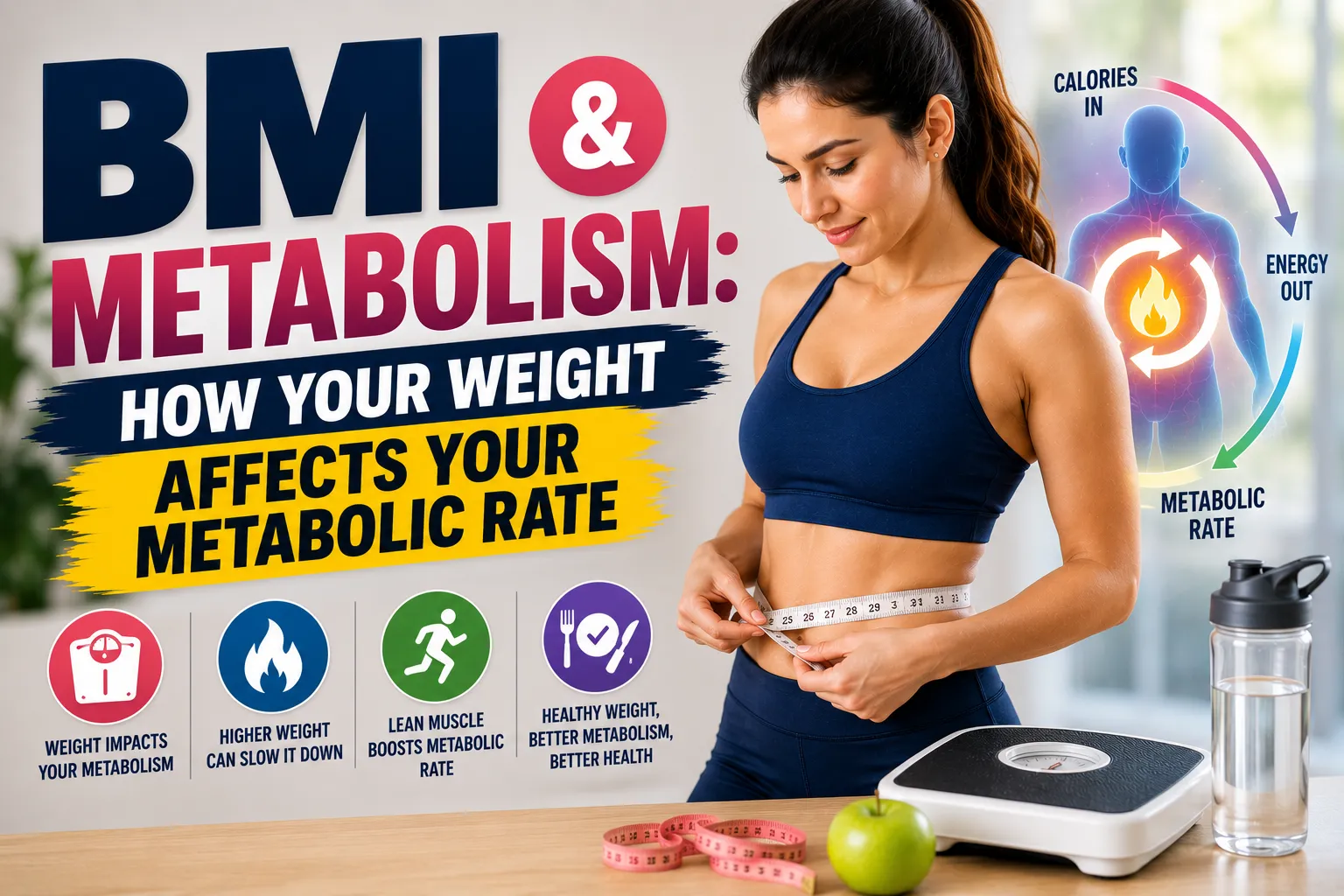
How Your Weight Affects Your Metabolic Rate
BMI Calculator
Calculate Your BMIYou've probably heard people say "my metabolism is slow" or "I have a fast metabolism." But what does that actually mean? And does your BMI have anything to do with it?
The short answer is yes. Your weight and your metabolism are deeply connected. But the relationship isn't as simple as "higher BMI = slower metabolism."
Here's what actually happens and why it matters for your health.
Calculate Your BMI
Free BMI CalculatorWhat is Metabolism?
Metabolism is the process by which your body converts food into energy. It's not a single thing—it's a collection of chemical reactions that keep you alive.
Your total daily energy expenditure (TDEE) is made up of three components:
- Basal Metabolic Rate (BMR): The energy your body needs to perform basic functions like breathing, circulation, and cell repair. This accounts for about 60-75% of your daily calorie burn.
- Physical Activity: The energy you burn through movement and exercise. This accounts for about 15-30% of your daily calorie burn.
- Thermic Effect of Food: The energy your body uses to digest and process food. This accounts for about 10% of your daily calorie burn.
How BMI Affects Metabolism
Your BMI affects your metabolism in several ways:
1. Body Size and BMR
Larger bodies have higher BMRs. A person with a higher BMI has more body mass, which requires more energy to maintain. This means a person with a BMI of 30 burns more calories at rest than a person with a BMI of 22—simply because they have more tissue.
But this doesn't mean weight gain is inevitable. It just means that as you gain weight, your body adjusts by increasing your basal metabolic rate.
2. Muscle Mass
Muscle is metabolically active tissue. It burns more calories at rest than fat. A person with higher muscle mass has a higher metabolism. This is why two people with the same BMI can have very different metabolic rates.
3. Fat Tissue and Inflammation
Excess fat tissue, especially visceral fat, produces inflammatory chemicals. These chemicals can disrupt normal metabolic function and lead to insulin resistance. Insulin resistance makes it harder for your body to process energy, which can lead to weight gain.
4. Weight Cycling
Repeated cycles of losing and gaining weight can slow your metabolism. This is known as "metabolic adaptation." Your body becomes more efficient at using fewer calories, making it harder to lose weight and easier to gain it back.
BMI and Metabolism by Category
| BMI Category | BMR | Metabolic Health |
|---|---|---|
| Normal (18.5-24.9) | Baseline | Good |
| Overweight (25-29.9) | Higher | Moderate |
| Obese Class I (30-34.9) | Much Higher | Poor |
| Obese Class II (35-39.9) | Very High | Very Poor |
| Obese Class III (40+) | Extremely High | Severely Poor |
Infographic: BMI and Metabolism
| BMI | Category | BMR | Metabolic Health |
|---|---|---|---|
| 18.5-24.9 | Normal | Baseline | ✅ Good |
| 25-29.9 | Overweight | Higher | ⚠️ Moderate |
| 30-34.9 | Obese I | Much Higher | ❌ Poor |
| 35-39.9 | Obese II | Very High | ❌ Very Poor |
| 40+ | Obese III | Extremely High | ❌ Severely Poor |
Why Weight Loss Can Slow Your Metabolism
When you lose weight, your metabolism slows down. This is a normal biological response. Your body has less mass to maintain, so it requires fewer calories.
But for some people, especially those with higher BMIs, this slowdown can be more significant. Your body becomes more efficient at using fewer calories, making it harder to continue losing weight.
This is why "weight loss plateaus" happen. You're doing the same things you did before, but the weight stops coming off. Your metabolism has adapted.
What You Can Do
1. Build Muscle
Muscle burns more calories at rest than fat. Even if you're not losing weight, adding muscle can improve your metabolic rate. Strength training is the most effective way to build muscle.
2. Eat Enough Protein
Protein has a higher thermic effect than carbohydrates or fats. Your body burns more calories digesting protein. Aim for 1.2-1.5g per kg of body weight.
3. Don't Crash Diet
Very low-calorie diets slow your metabolism. Your body goes into "survival mode" and conserves energy. This makes weight loss harder and weight regain easier.
4. Move Throughout the Day
Non-exercise activity thermogenesis (NEAT) refers to the calories you burn through daily movement. Taking the stairs, walking, and standing all contribute to metabolic health.
5. Get Enough Sleep
Poor sleep disrupts metabolic hormones and can slow your metabolism. Aim for 7-8 hours of quality sleep per night.
When to See a Doctor
If you're struggling with weight despite making changes, talk to your doctor. There may be underlying issues affecting your metabolism, such as:
- Thyroid disorders
- Insulin resistance
- Hormonal imbalances
- Medication side effects
Your doctor can help you identify and address these issues.
Frequently Asked Questions
Does higher BMI mean slower metabolism?
Not necessarily. People with higher BMIs actually have higher BMRs because they have more mass to maintain. But metabolic health tends to be worse in people with higher BMIs.
Can I increase my metabolism?
Yes. Building muscle, eating enough protein, moving throughout the day, and getting enough sleep can all increase your metabolic rate.
Will losing weight permanently slow my metabolism?
Some slowing is normal, but it can be minimized by losing weight gradually, maintaining muscle mass, and avoiding very low-calorie diets.
How can I speed up my metabolism?
Strength training, adequate protein intake, regular movement, and quality sleep all support a healthy metabolism.
Scientific References
- National Institutes of Health. Metabolic rate and body weight.
- American Journal of Clinical Nutrition. BMI and metabolism.
- Harvard Health. How to boost your metabolism.
Key Takeaways
- Larger bodies have higher BMRs but worse metabolic health
- Muscle burns more calories at rest than fat
- Excess visceral fat disrupts normal metabolic function
- Weight loss slows metabolism as body adapts to lower weight
- Building muscle increases metabolic rate
- Eating protein burns more calories during digestion
- Crash diets slow metabolism and lead to weight regain
- Daily movement (NEAT) supports metabolic health
- Sleep deprivation disrupts metabolic hormones
- Address underlying issues like thyroid disorders with your doctor
Check Your BMI
BMI Calculator
You May Also Like