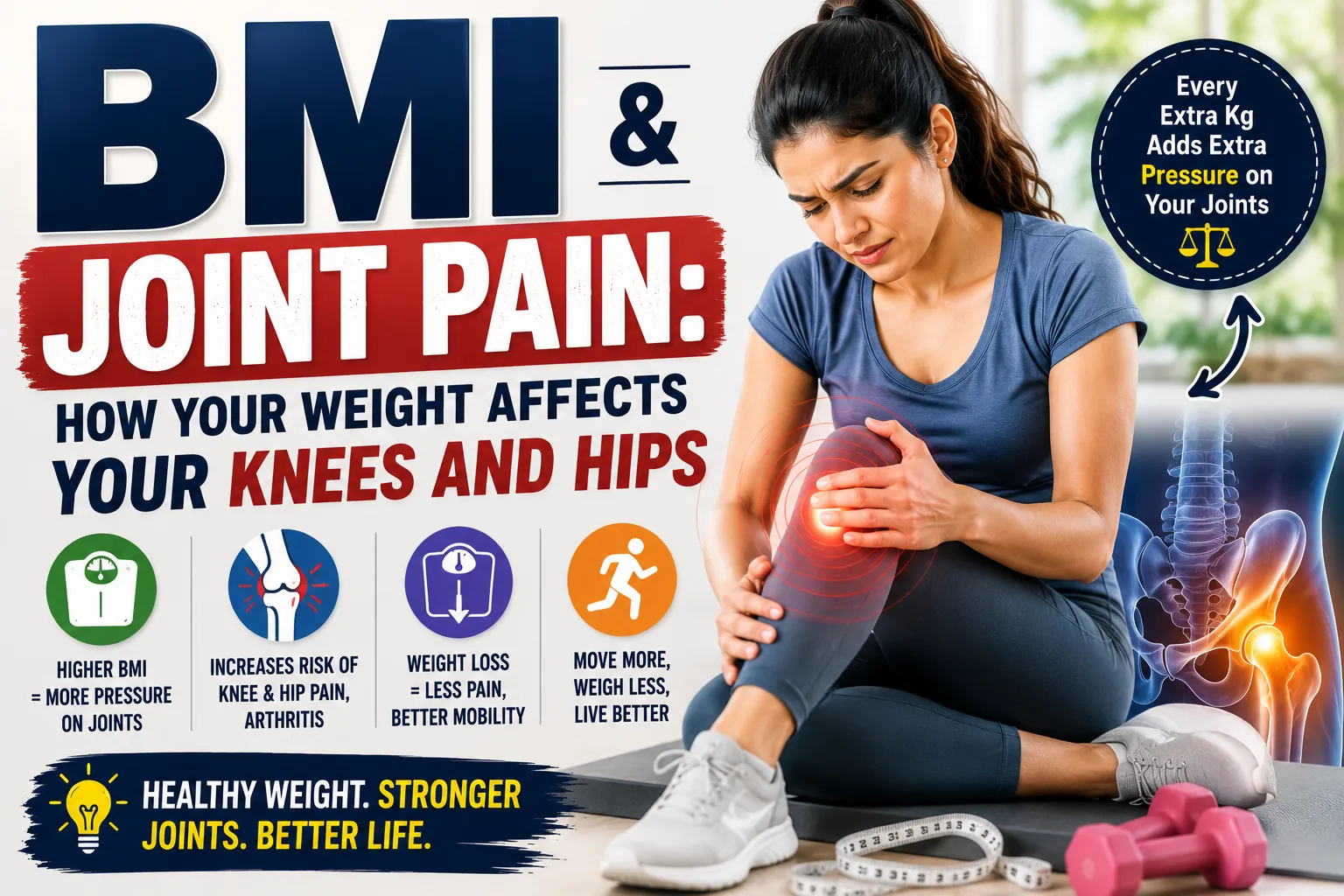
How Your Weight Affects Your Knees and Hips
BMI Calculator
Calculate Your BMIYour knees hurt when you walk up stairs. Your hips ache at the end of the day. Your lower back is stiff in the morning.
You might think this is just "getting older." But there's another factor that often gets overlooked: your weight.
Every kilogram of extra weight puts pressure on your joints. And the connection between BMI and joint pain is one of the most direct links in health research.
Here's what you need to know—and what you can do about it.
Calculate Your BMI
Free BMI CalculatorWhat the Research Says
The connection between BMI and joint pain is clear. Research shows that higher BMI is strongly linked to osteoarthritis, especially in weight-bearing joints like the knees and hips.
A study published in the journal Arthritis & Rheumatology found that people with a BMI of 30 or higher have a 4-5 times higher risk of knee osteoarthritis than people with normal BMI. For every 5 kg (11 lbs) of weight gain, the risk of knee osteoarthritis increases by about 36%.
Another study found that obesity accounts for approximately 70% of all knee replacement surgeries in women and 50% in men.
The connection is simple: more weight = more pressure on your joints.
How Weight Affects Your Joints
1. Mechanical Stress
Every kilogram of extra weight adds about 4 kilograms of pressure to your knees. A 10 kg (22 lbs) weight gain adds 40 kg (88 lbs) of pressure to your knees with each step. This constant pressure damages cartilage over time.
2. Inflammation
Fat tissue isn't passive—it's active. It produces inflammatory chemicals called adipokines and cytokines. These chemicals travel through your body and cause inflammation in your joints, even the ones that don't bear weight.
3. Insulin Resistance
Higher BMI is linked to insulin resistance. Insulin resistance promotes inflammation and cartilage damage. This creates a cycle: weight gain causes inflammation, which damages joints, which makes exercise harder, which leads to more weight gain.
BMI and Joint Pain Risk
| BMI Category | Joint Pain Risk | Risk of Knee Osteoarthritis |
|---|---|---|
| Normal (18.5-24.9) | Baseline | Baseline |
| Overweight (25-29.9) | 2x higher | 2x higher |
| Obese Class I (30-34.9) | 3x higher | 4x higher |
| Obese Class II (35-39.9) | 4x higher | 5x higher |
| Obese Class III (40+) | 5x+ higher | 7x+ higher |
Infographic: How Weight Affects Your Joints
| Weight Gain | Pressure on Knees | Risk of Osteoarthritis |
|---|---|---|
| 5 kg (11 lbs) | +20 kg (44 lbs) | +36% |
| 10 kg (22 lbs) | +40 kg (88 lbs) | +72% |
| 15 kg (33 lbs) | +60 kg (132 lbs) | +108% |
| 20 kg (44 lbs) | +80 kg (176 lbs) | +144% |
What About Waist Size?
Waist circumference also matters for joint pain. Visceral fat—the fat around your organs—is particularly inflammatory. People with large waists have higher levels of joint inflammation, even if their BMI is moderate.
Healthy waist measurements:
- Women: Less than 80 cm (31.5 inches)
- Men: Less than 94 cm (37 inches)
Why Losing Weight Helps
The good news is that even modest weight loss can reduce joint pain significantly. Research shows that losing just 5-10% of your body weight can:
- Reduce knee pain by 20-30%
- Reduce knee cartilage damage
- Improve mobility and function
- Reduce inflammation levels
- Decrease the need for pain medication
For a person weighing 90 kg (200 lbs), losing 5% means losing 4.5 kg (10 lbs). That's achievable within 2-3 months with consistent effort. And the pain relief can begin within weeks of starting weight loss.
What You Can Do
1. Start Walking
Walking is low-impact and effective for weight loss and joint health. Start with 10-15 minutes daily and gradually increase. Walking on flat surfaces is easier on your knees than hills.
Tip: Wear supportive shoes. Replace them every 6 months.
2. Try Low-Impact Exercise
Water aerobics, swimming, and cycling are easier on your joints than high-impact exercises like running. They allow you to exercise without putting extra pressure on your joints.
3. Strength Train
Strong muscles support your joints. Focus on exercises that build the muscles around your knees, hips, and spine. Squats (with good form), leg raises, and core work are all helpful.
Important: If you have joint pain, start with low-impact exercises and consult a physical therapist or trainer for guidance on proper form.
4. Reduce Inflammation
Anti-inflammatory foods can help reduce joint pain. Eat more vegetables, fruits, fatty fish (salmon, sardines), and healthy fats (olive oil, nuts). Reduce processed foods, sugar, and refined carbohydrates.
5. Get Enough Sleep
Poor sleep increases inflammation and pain sensitivity. Aim for 7-8 hours of quality sleep per night.
When to See a Doctor
If you have joint pain that affects your daily activities, talk to your doctor. They can:
- Evaluate the cause of your pain
- Rule out other conditions (rheumatoid arthritis, gout, etc.)
- Refer you to a physical therapist
- Recommend appropriate pain management
- Help you create a safe weight loss plan
Frequently Asked Questions
Can losing weight reduce knee pain?
Yes. Losing 5-10% of body weight reduces knee pain by 20-30%. Many people experience relief within weeks of starting weight loss.
Is exercise safe if I have joint pain?
Yes, but start with low-impact exercises like walking, swimming, or cycling. Avoid high-impact activities like running or jumping. Always consult a physical therapist if you have significant pain.
Does BMI affect back pain?
Yes. Higher BMI is linked to lower back pain. The link is particularly strong for women. Excess weight increases pressure on the spine and can lead to disc degeneration.
Can I reverse joint damage with weight loss?
Weight loss can reduce pain and slow the progression of joint damage, but it can't fully reverse existing osteoarthritis. However, it can prevent further damage and improve function.
Scientific References
- Arthritis & Rheumatology. Obesity and knee osteoarthritis risk.
- American College of Rheumatology. Obesity and joint health.
- National Institutes of Health. Weight loss and joint pain.
Key Takeaways
- Higher BMI increases risk of knee osteoarthritis by 4-5 times
- Every 5 kg weight gain increases knee osteoarthritis risk by 36%
- Each kg of extra weight adds 4 kg of pressure to your knees
- Fat tissue produces inflammatory chemicals that damage joints
- Losing 5-10% of body weight reduces knee pain by 20-30%
- Waist circumference also matters for joint pain
- Start with low-impact exercises like walking, swimming, or cycling
- Strength training supports joints by building supportive muscles
- Anti-inflammatory foods can reduce joint pain
- Talk to your doctor if joint pain affects your daily activities
Check Your BMI
BMI Calculator
You May Also Like