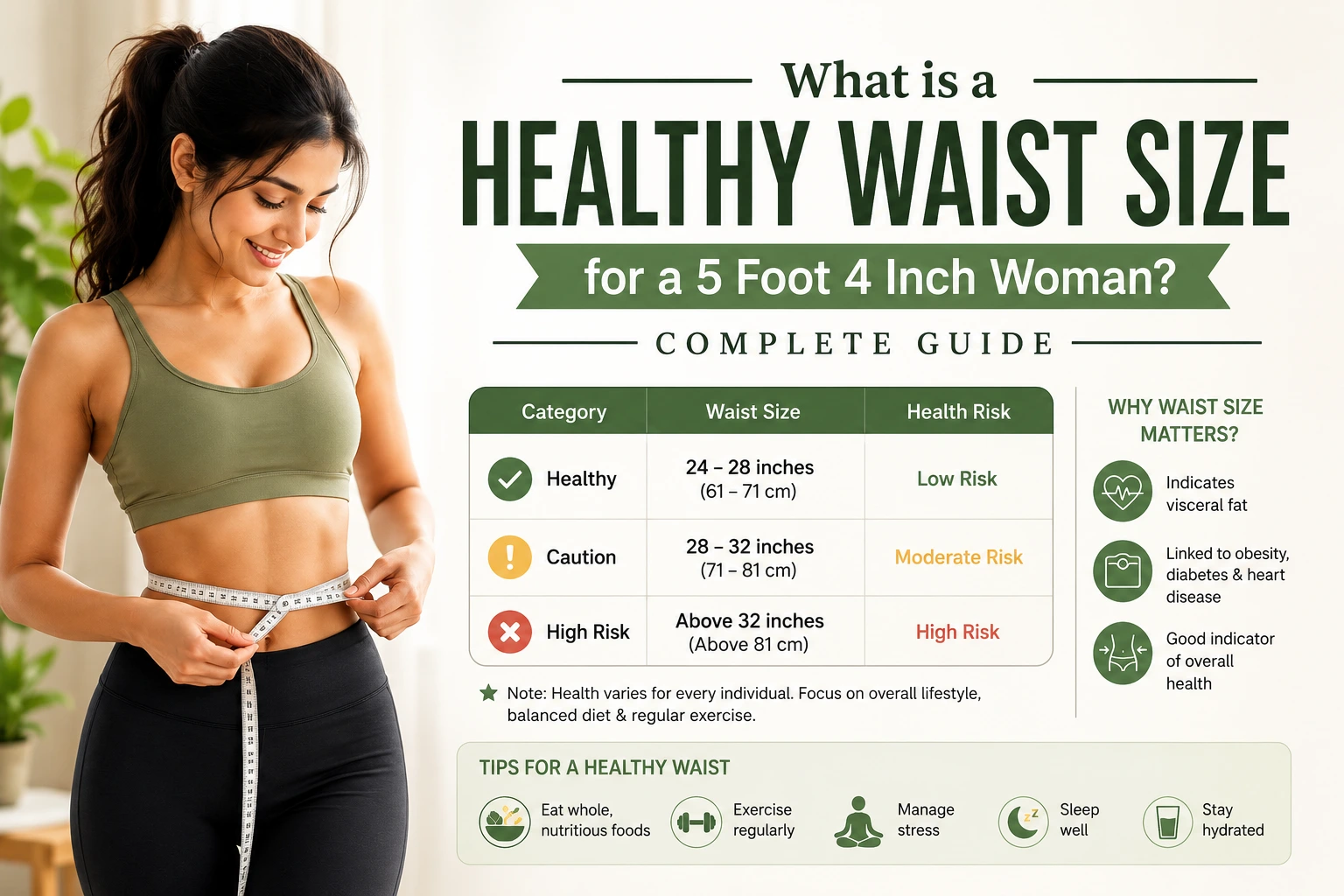
What is a Healthy Waist Size for a 5 Foot 4 Inch Woman? Complete Guide
BMI Calculator
Calculate Your BMIIf you're 5 feet 4 inches tall, you've probably wondered: what should my waist size be? You're not alone. Thousands of women search for this exact answer every month.
The good news? There's a simple, science-backed answer. And it's not just about numbers - it's about your health.
Calculate Your BMI and Waist Ratio
Free BMI CalculatorThe Exact Answer: Healthy Waist Size for 5'4" Woman
For a woman who is 5 feet 4 inches tall (163 cm), a healthy waist size is less than 32 inches (81 cm).
This number comes from the Waist-to-Height Ratio (WHtR) rule, which is one of the most powerful predictors of metabolic health. The rule is simple: your waist should be less than half your height.
Calculation for 5'4" (64 inches):
64 inches ÷ 2 = 32 inches maximum healthy waist
For metric: 163 cm ÷ 2 = 81.5 cm maximum healthy waist
Waist Size Categories for 5'4" Women
| Waist Size | Category | Health Risk |
|---|---|---|
| Less than 32 inches (81 cm) | Healthy | Lowest disease risk |
| 32 - 35 inches (81 - 89 cm) | Increased risk | Moderate risk of heart disease, diabetes |
| More than 35 inches (89 cm) | High risk | Significant health risk - consult doctor |
Why Waist Size Matters More Than BMI for Women
BMI tells you about your weight relative to height. But it cannot tell you where your fat is stored. Two women with the same BMI can have completely different health risks based on their waist size.
Example: Two women both 5'4" and 150 lbs have the same BMI of 25.7 (overweight). But:
- Woman A has waist 30 inches → Lower health risk
- Woman B has waist 36 inches → Much higher health risk
This is why waist measurement is so important.
The Science: Why Belly Fat is Dangerous
The fat around your belly is not all the same. There are two types:
- Subcutaneous fat: The fat just under your skin that you can pinch. Less dangerous.
- Visceral fat: The fat stored deep inside your abdomen, wrapped around your liver, pancreas, and intestines. This is the dangerous one.
Visceral fat releases inflammatory chemicals that increase your risk of heart disease, type 2 diabetes, high blood pressure, and certain cancers. This is why waist size is such a powerful health predictor.
Measure Your Waist-to-Height Ratio
Calculate NowHow to Measure Your Waist Correctly
Most people measure at the wrong spot. Here's the correct way:
- Find the correct location: The midpoint between your lowest rib and the top of your hip bone (iliac crest). This is NOT your belly button.
- Stand upright: Feet shoulder-width apart, weight evenly distributed.
- Use a flexible measuring tape: Not a metal tape measure.
- Keep tape horizontal: Parallel to the floor all the way around.
- Snug but not tight: You should be able to slip one finger between tape and skin.
- Relax and exhale: Do NOT suck in your stomach. Breathe out normally and measure.
- Record to nearest 0.5 cm or 1/4 inch.
Common Mistakes When Measuring Waist
- Measuring at the belly button: This is not the standardized location
- Sucking in your stomach: This gives false reassurance
- Measuring over clothing: Thick clothes add inches
- Pulling tape too tight: Underestimates waist size
- Measuring after a large meal: Food in stomach increases measurement
How to Reduce Belly Fat for a 5'4" Woman
1. Increase Protein Intake
Aim for 25-30 grams of protein per meal. Protein reduces cravings, increases fullness, and preserves muscle during weight loss.
Good sources: Eggs, Greek yogurt, chicken, fish, tofu, lentils.
2. Walk 30 Minutes Daily
Walking is one of the most effective exercises for reducing visceral fat. A 30-minute brisk walk burns 150-200 calories and reduces stress hormones that cause belly fat storage.
3. Add Strength Training 2-3 Times Weekly
Building muscle boosts your metabolism 24/7. You don't need heavy weights - bodyweight exercises work great at home.
Home exercises: Squats, lunges, push-ups, planks, glute bridges.
4. Reduce Added Sugars
Sugar is the #1 contributor to belly fat. Replace sugary drinks with water, sparkling water, or unsweetened tea.
5. Get 7-8 Hours of Sleep
Sleep deprivation increases cortisol, which directly causes belly fat storage. Poor sleep also increases hunger hormones by 25%.
6. Manage Stress
Chronic stress raises cortisol, which tells your body to store fat around your belly. Try deep breathing, morning walks, or meditation.
Sample One-Day Meal Plan for Belly Fat Loss
Breakfast (7:00 AM): Greek yogurt with berries and chia seeds
Lunch (12:00 PM): Large salad with grilled chicken, avocado, olive oil dressing
Afternoon snack (3:00 PM): Apple with peanut butter
Dinner (6:00 PM): Baked salmon with roasted broccoli and quinoa
Track Your Progress
Calculate BMI + Waist RatioFrequently Asked Questions
What is a healthy waist size for a 5'4" woman over 50?
The same guideline applies: less than 32 inches. However, after menopause, women tend to gain more belly fat. Strength training and protein intake become even more important.
Can I have a healthy BMI but large waist?
Yes. This is called "normal weight obesity" or "TOFI" (Thin Outside, Fat Inside). Even with normal BMI, a large waist increases health risks. Measure your waist regardless of your weight.
How quickly can I reduce my waist size?
With consistent diet and exercise, most women see noticeable waist reduction in 4-8 weeks. Visceral fat often responds faster than subcutaneous fat.
Does waist size matter for women of all ages?
Yes. The waist-to-height ratio rule (waist less than half your height) applies to all adults regardless of age, gender, or ethnicity.
When to See a Doctor
Consult your healthcare provider if:
- Your waist size exceeds 35 inches (89 cm) regardless of height
- You have other risk factors like high blood pressure, diabetes, or family history of heart disease
- You're gaining weight rapidly without explanation
- You need help creating a weight loss plan
Scientific References
- World Health Organization. Waist circumference and waist-hip ratio.
- Ashwell, M., et al. (2012). Waist-to-height ratio is a better screening tool. PLoS ONE.
- National Heart, Lung, and Blood Institute. Assessing your weight and health risk.
Calculate Your Waist-to-Height Ratio
Free Waist Ratio CalculatorCheck Your BMI
BMI Calculator
You May Also Like