How to Measure Waist Circumference Correctly for Weight Loss: A Step-by-Step Guide
BMI Calculator
Calculate Your BMIYou step on the scale every morning. You track your weight religiously. But the number doesn't move, and you're frustrated. Here's the truth: your weight is a liar.
Water retention, muscle gain, hormones, and even the time of day can change your weight by 1-2 kg. But your waist measurement? That doesn't lie.
If you're serious about losing belly fat, you need to measure your waist correctly. The problem is, most people do it wrong. And when you measure wrong, you can't track progress accurately.
Track Your BMI and Waist Ratio
Free BMI CalculatorWhy Waist Measurement Matters More Than Weight
Your scale tells you about total body weight. It cannot tell you:
- How much of that weight is dangerous belly fat
- Whether you're losing fat or muscle
- Your risk for heart disease, diabetes, or stroke
Waist circumference specifically measures visceral fat — the dangerous fat wrapped around your liver, pancreas, and intestines. This is the fat that causes disease. And the good news? Visceral fat is often the first fat to go when you start exercising.
What is a Healthy Waist Size?
Before you measure, know your target:
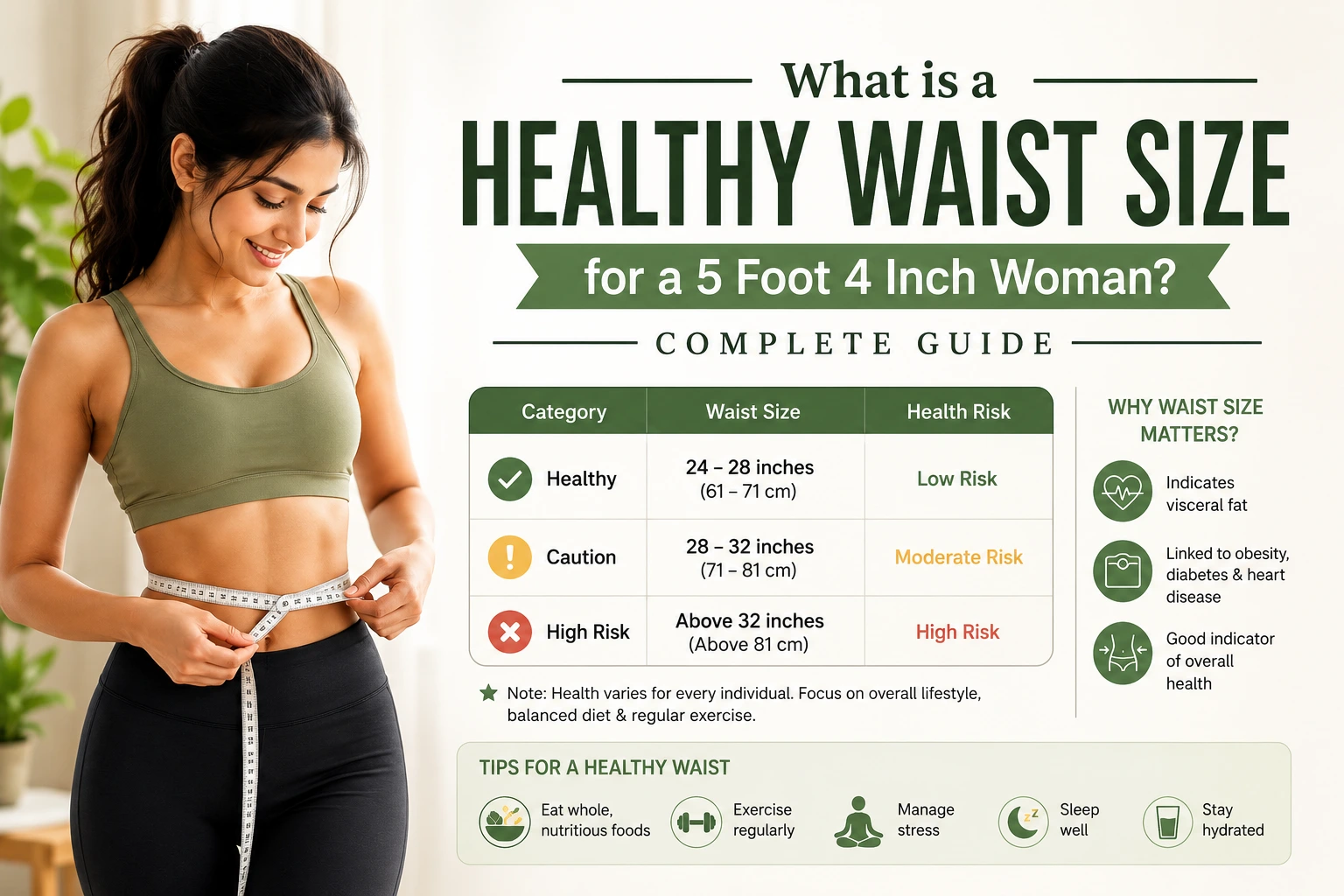
- Women: Less than 80 cm (31.5 inches)
- Men: Less than 94 cm (37 inches)
- Waist-to-Height Ratio: Less than 0.5 for everyone
The waist-to-height ratio rule is simple: your waist should be less than half your height. For a 5'4" woman (64 inches), maximum healthy waist is 32 inches.
Step-by-Step: How to Measure Your Waist Correctly
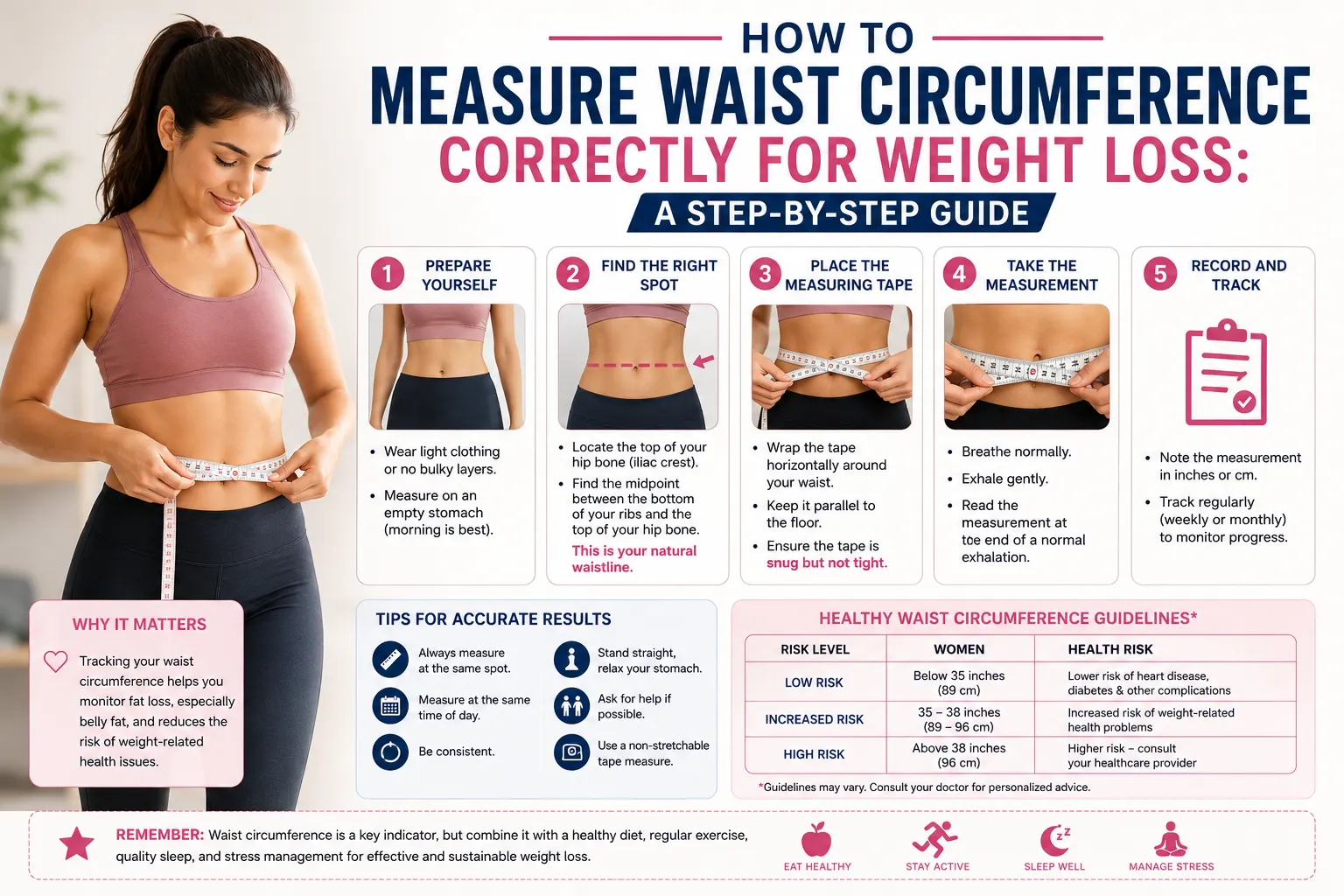
Step 1: Find the Correct Location
Most people measure at their belly button. This is wrong.
The correct location is the midpoint between your lowest rib and the top of your hip bone (iliac crest).
How to find it:
- Locate your lowest rib (the bottom rib on your rib cage)
- Locate the top of your hip bone (the bony prominence on the side of your hip)
- Find the midway point between these two landmarks
- This is where you measure — not at your belly button
Step 2: Stand Upright
Stand with your feet shoulder-width apart. Weight evenly distributed. Do not lean to one side.
Step 3: Use the Right Tape
Use a flexible, non-stretchable measuring tape. Cloth or plastic tape measures work best. Do not use a metal tape measure.
Step 4: Position the Tape Correctly
Wrap the tape around your bare abdomen at the marked location. The tape should be horizontal (parallel to the floor) all the way around.
Step 5: Apply Proper Tension
The tape should be snug against your skin but not compressing it. You should be able to slip one finger between the tape and your skin. Too tight = false reading. Too loose = false reading.
Step 6: Relax and Exhale
Do NOT suck in your stomach. Do NOT hold your breath. Breathe out normally and take the measurement at the end of a normal exhalation.
Step 7: Read and Record
Look at the tape at the point where it meets the starting end. Record to the nearest 0.5 cm or 1/4 inch.
Step 8: Take Two Measurements
Measure twice. If the two measurements differ by more than 1 cm, take a third and average the two closest.
Calculate Your Waist-to-Height Ratio
Measure Your RiskCommon Mistakes to Avoid
| Mistake | Why It's Wrong | Correct Way |
|---|---|---|
| Measuring at the belly button | Not the standardized location | Midpoint between lowest rib and hip bone |
| Sucking in your stomach | False reassurance, inaccurate tracking | Relax, breathe out normally |
| Measuring over clothing | Thick clothes add inches | Measure on bare skin or very thin tight clothing |
| Pulling tape too tight | Underestimates waist size | Snug but able to slip one finger under |
| Measuring after a meal | Food in stomach increases measurement | Measure in the morning before eating |
| Measuring at different times | Measurements vary throughout the day | Always measure at the same time (morning is best) |
How Often Should You Measure?
- For weight loss tracking: Every 2-4 weeks (not daily)
- For general health monitoring: Every 3-6 months
- Best time to measure: Morning, before eating, after using the bathroom
Do not measure daily. Your waist can fluctuate 0.5-1 cm daily due to water retention, bloating, and hormones. Weekly or bi-weekly measurements show true trends.
What Your Waist Measurement Means
Once you have your measurement, compare it to these standards:
For Women:
- Less than 80 cm (31.5 inches): Healthy range — lowest disease risk
- 80-88 cm (31.5-34.6 inches): Increased risk — action recommended
- More than 88 cm (34.6 inches): High risk — consult your doctor
For Men:
- Less than 94 cm (37 inches): Healthy range — lowest disease risk
- 94-102 cm (37-40 inches): Increased risk — action recommended
- More than 102 cm (40 inches): High risk — consult your doctor
How to Reduce Your Waist Size
If your waist measurement is too high, here's what works:
1. Walk 30 Minutes Daily
Walking is the most effective exercise for reducing visceral fat. A 30-minute brisk walk burns 150-200 calories and reduces stress hormones that cause belly fat storage.
2. Add Strength Training 2-3 Times Weekly
Building muscle boosts your metabolism 24/7. Bodyweight exercises work great at home: squats, lunges, push-ups, planks.
3. Increase Protein Intake
Aim for 25-30 grams of protein per meal. Protein reduces cravings and preserves muscle during weight loss.
4. Reduce Added Sugars
Sugar is the #1 contributor to belly fat. Replace sugary drinks with water or sparkling water.
5. Get 7-8 Hours of Sleep
Sleep deprivation increases cortisol, which directly causes belly fat storage.
Track Your Progress
BMI + Waist CalculatorFrequently Asked Questions
Should I measure my waist over or under clothes?
Measure on bare skin or over very thin, tight-fitting clothing. Thick clothing adds centimeters and gives false readings.
What if my waist measurement fluctuates?
Normal fluctuations of 0.5-1 cm are common due to water retention, bloating, and hormones. Focus on weekly or bi-weekly trends, not daily numbers.
Can I measure my waist by myself?
Yes. Stand in front of a mirror to ensure the tape is horizontal. If possible, have someone else measure for better accuracy.
How long does it take to reduce waist size?
With consistent diet and exercise, most people see measurable waist reduction within 4-8 weeks. Visceral fat often responds faster than weight loss.
Scientific References
- World Health Organization. Waist circumference and waist-hip ratio.
- Ashwell, M., et al. (2012). Waist-to-height ratio is a better screening tool. PLoS ONE.
- National Heart, Lung, and Blood Institute. Assessing your weight and health risk.
Start Tracking Your Waist Today
Calculate Your Waist-to-Height RatioKey Takeaways
- Measure at the midpoint between your lowest rib and hip bone, not at your belly button
- Stand upright with feet shoulder-width apart, weight evenly distributed
- Use a flexible, non-stretchable measuring tape
- Keep the tape horizontal, parallel to the floor
- Tape should be snug but not compressing skin
- Do not suck in your stomach - breathe out normally
- Take two measurements and average them for accuracy
- Women: healthy waist is less than 80 cm (31.5 inches)
- Men: healthy waist is less than 94 cm (37 inches)
- Waist-to-height ratio should be less than 0.5 for everyone
Check Your BMI
BMI Calculator
You May Also Like