What is a Normal Waist Size for Women?

BMI Calculator
Calculate Your BMIYou know your weight. You might even know your BMI. But do you know your waist size?
Your waist circumference may be the single most important number for predicting your health risk. It tells you about visceral fat — the dangerous fat wrapped around your organs.
Here's what a normal waist size looks like for women, broken down by age and height.
Measure Your Waist-to-Height Ratio
Free Waist Ratio CalculatorThe One Rule That Works for Everyone
Instead of memorizing different numbers for different ages, use the Waist-to-Height Ratio (WHtR) rule:
Your waist should be less than half your height.
This rule works for women of all ages, heights, and body types. It's simple, free, and takes 30 seconds to check.
Example:
- Height 160 cm → Maximum healthy waist: 80 cm
- Height 165 cm → Maximum healthy waist: 82.5 cm
- Height 170 cm → Maximum healthy waist: 85 cm
- Height 175 cm → Maximum healthy waist: 87.5 cm
Normal Waist Size for Women by Height
| Height (cm) | Height (ft/in) | Healthy Waist (cm) | Healthy Waist (inches) |
|---|---|---|---|
| 150 cm | 4'11" | Less than 75 cm | Less than 29.5" |
| 155 cm | 5'1" | Less than 77.5 cm | Less than 30.5" |
| 160 cm | 5'3" | Less than 80 cm | Less than 31.5" |
| 163 cm | 5'4" | Less than 81.5 cm | Less than 32" |
| 165 cm | 5'5" | Less than 82.5 cm | Less than 32.5" |
| 168 cm | 5'6" | Less than 84 cm | Less than 33" |
| 170 cm | 5'7" | Less than 85 cm | Less than 33.5" |
| 175 cm | 5'9" | Less than 87.5 cm | Less than 34.5" |
| 180 cm | 5'11" | Less than 90 cm | Less than 35.5" |
Normal Waist Size for Women by Age
The WHtR rule (waist less than half your height) applies at all ages. However, waist size naturally increases with age. Here's what's typical:
| Age Group | Average Waist (cm) | Average Waist (inches) | Health Risk Cutoff |
|---|---|---|---|
| 20-29 years | 72-78 cm | 28-31" | 80 cm / 31.5" |
| 30-39 years | 74-80 cm | 29-31.5" | 80 cm / 31.5" |
| 40-49 years | 76-84 cm | 30-33" | 80 cm / 31.5" |
| 50-59 years | 78-88 cm | 31-34.5" | 80 cm / 31.5" |
| 60-69 years | 80-90 cm | 31.5-35.5" | 80 cm / 31.5" |
| 70+ years | 80-92 cm | 31.5-36" | 80 cm / 31.5" |
Note: The health risk cutoff of 80 cm (31.5 inches) applies at all ages. Waist size above 80 cm increases health risk regardless of age.
Check Your Waist Risk
BMI + Waist CalculatorWhat Your Waist Size Means for Your Health
| Waist Size (Women) | Risk Level | What It Means |
|---|---|---|
| Less than 80 cm (31.5") | Low | Healthy range. Continue balanced lifestyle. |
| 80 - 88 cm (31.5 - 34.6") | Increased | Action recommended. Focus on reducing visceral fat. |
| More than 88 cm (34.6") | High | Medical evaluation recommended. Significant intervention needed. |
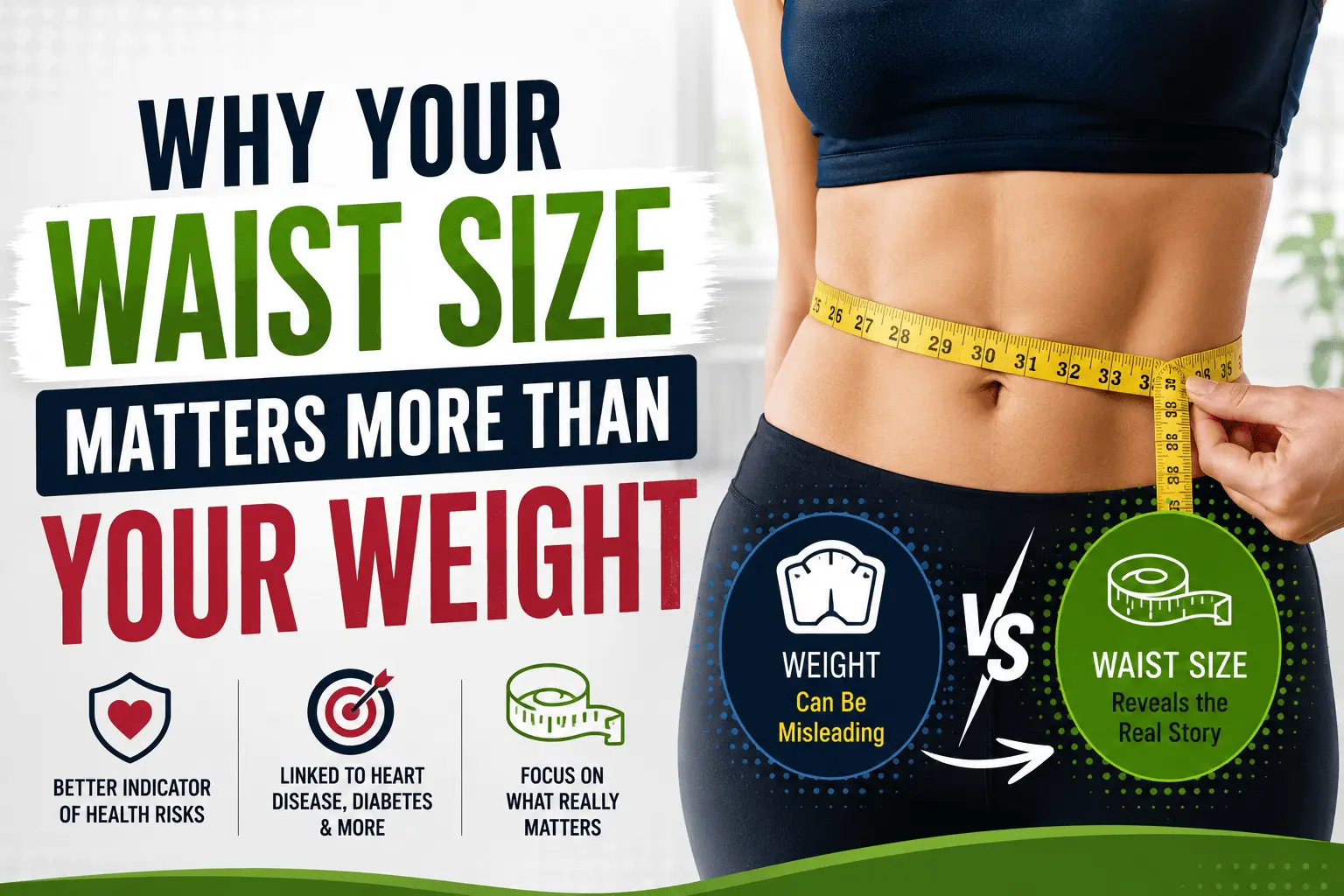
Why Waist Size Matters More Than Weight
Your waist size tells you about visceral fat — the fat wrapped around your internal organs. This is the fat that causes disease.
- Weight doesn't tell you where fat is stored
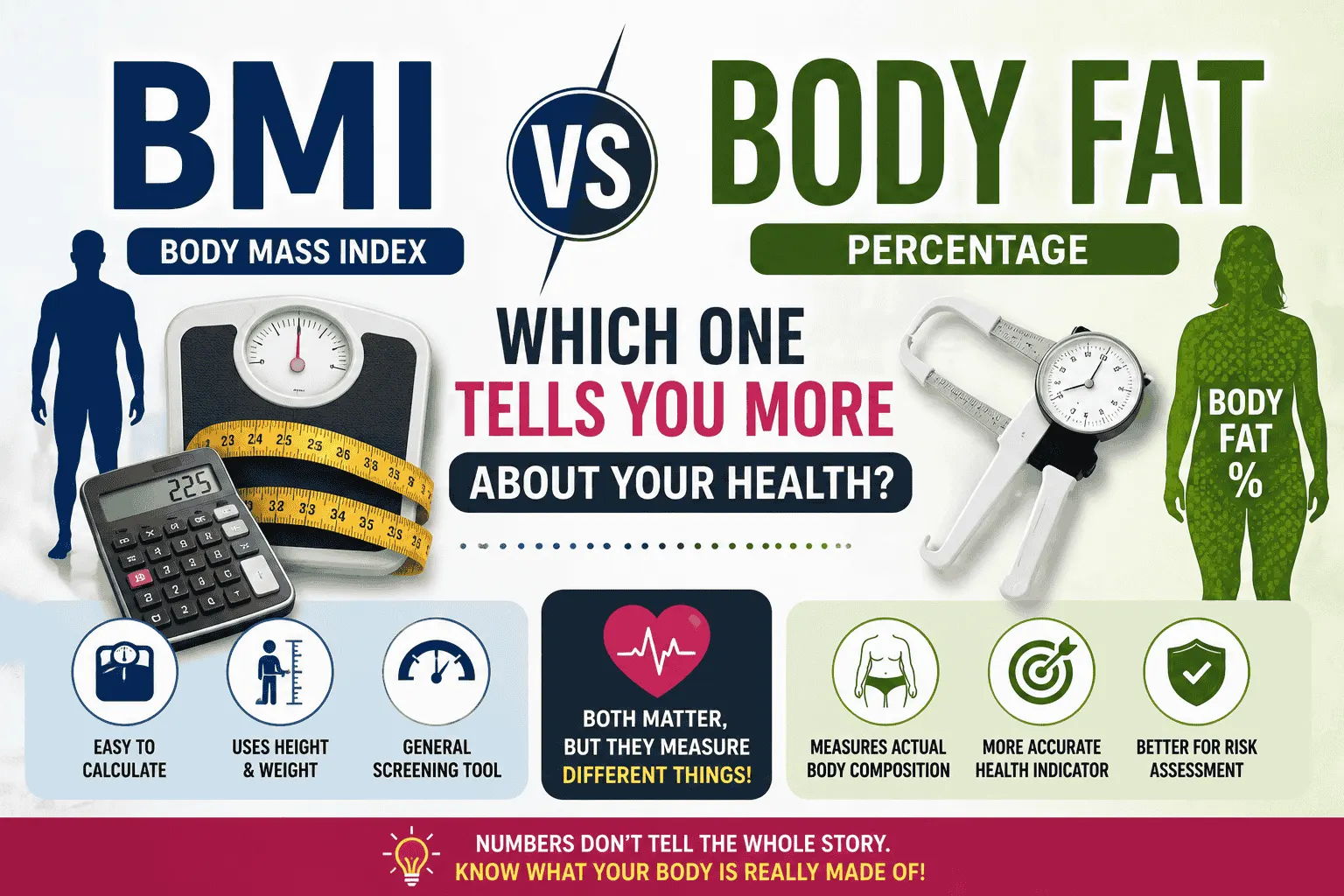
- BMI doesn't tell you about visceral fat
- Waist size tells you exactly about visceral fat
Research shows that women with normal BMI but large waist have higher mortality than women with overweight BMI but normal waist.
How to Measure Your Waist Correctly
- Find the correct location: Midpoint between your lowest rib and the top of your hip bone — NOT your belly button.
- Stand upright: Feet shoulder-width apart, weight evenly distributed.
- Use a flexible tape: Not a metal tape measure.
- Keep tape horizontal: Parallel to the floor all the way around.
- Snug but not tight: You should be able to slip one finger between tape and skin.
- Relax and exhale: Do NOT suck in your stomach.
How to Reduce Your Waist Size
1. Walk 30 Minutes Daily
Walking is the most effective exercise for reducing visceral fat. A 30-minute brisk walk burns 150-200 calories and reduces stress hormones that cause belly fat storage.
2. Add Strength Training 2-3 Times Weekly
Building muscle boosts metabolism and directly reduces waist size. Home exercises: squats, lunges, push-ups, planks, resistance bands.
3. Reduce Added Sugars
Sugar is the #1 contributor to belly fat. Replace sugary drinks with water or sparkling water.
4. Eat More Protein
Protein reduces cravings and preserves muscle. Aim for 25-30g per meal. Good sources: eggs, Greek yogurt, chicken, fish, tofu, lentils.
5. Get 7-8 Hours of Sleep
Sleep deprivation increases cortisol, which directly causes belly fat storage. Poor sleep also increases hunger hormones by 25%.
Frequently Asked Questions
What is a normal waist size for a 5'4" woman?
For a 5'4" woman (163 cm), a healthy waist is less than 32 inches (81.5 cm). This follows the rule that waist should be less than half your height.
Does waist size change with age?
Yes. Waist size naturally increases with age due to hormonal changes and muscle loss. However, the health risk threshold (80 cm / 31.5 inches) stays the same.
Can I have a healthy BMI but large waist?
Yes. This is called "normal weight obesity" or TOFI (Thin Outside, Fat Inside). Up to 30% of women with normal BMI have dangerous waist sizes. This is why waist measurement is so important.
How often should I measure my waist?
Every 2-4 weeks if you're actively trying to reduce waist size. Every 3-6 months for general health monitoring.
Scientific References
- World Health Organization. Waist circumference and health risk.
- National Heart, Lung, and Blood Institute. Assessing your weight and health risk.
- Ashwell, M., et al. (2012). Waist-to-height ratio is a better screening tool. PLoS ONE, 7(9), e44904.
Measure Your Health Risk
Calculate your waist-to-height ratio and get personalized health insights.
Free Waist Ratio CalculatorCheck Your BMI
BMI Calculator
You May Also Like