What is a Good BMI for My Age? Complete Age-Wise Chart
BMI Calculator
Calculate Your BMIYou've checked your BMI. You know the number. But you're wondering: is this good for my age?
The short answer is that the healthy BMI range for a 25-year-old isn't always the same as for a 65-year-old. Age matters. So does gender.
Here's a complete age-wise breakdown of what a healthy BMI looks like at different stages of life.
Calculate Your BMI
Free BMI CalculatorAge-Wise BMI Chart
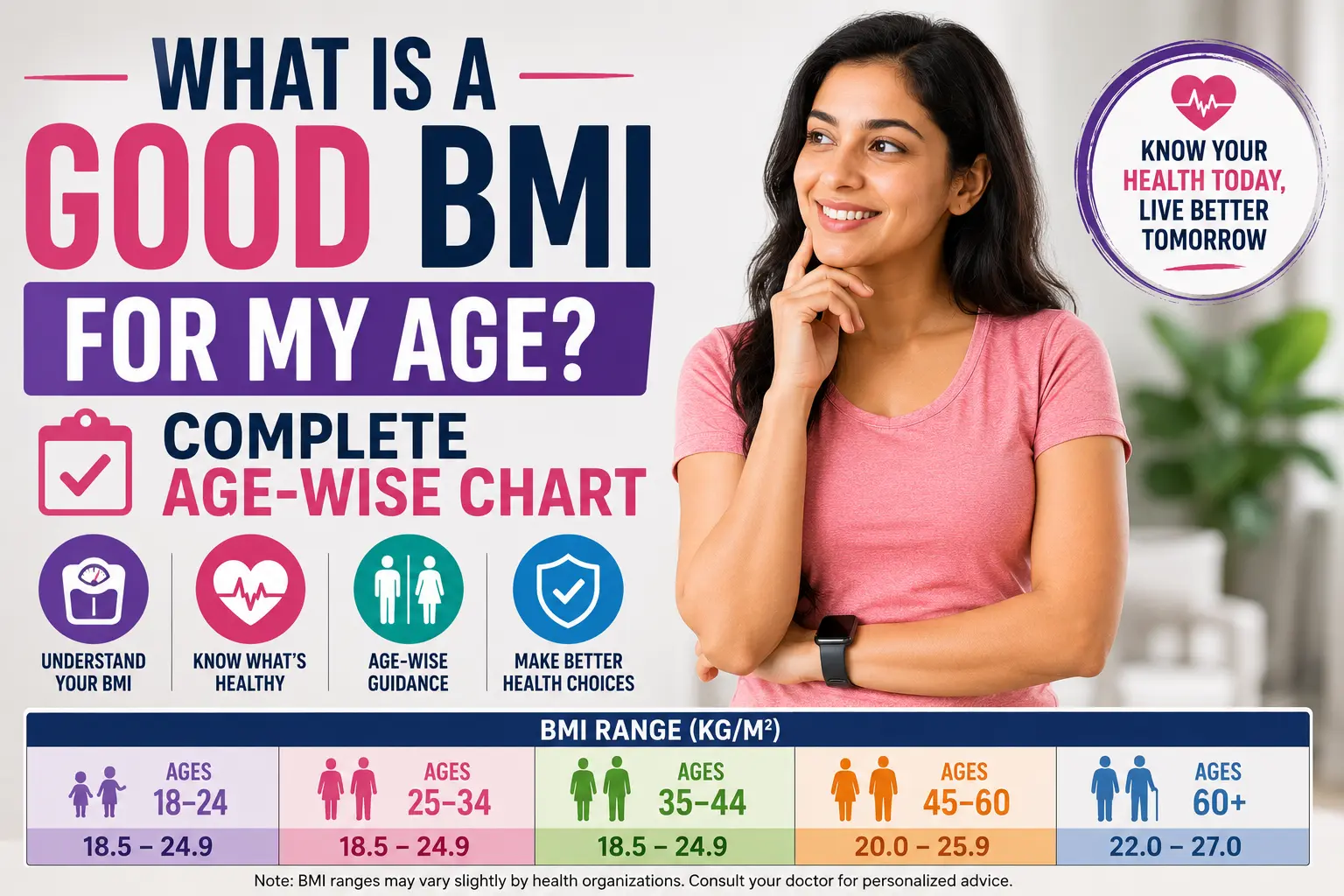
| Age Group | Women | Men | Notes |
|---|---|---|---|
| 20-30 years | 18.5 - 24.9 | 18.5 - 24.9 | Standard WHO range applies |
| 30-40 years | 18.5 - 24.9 | 18.5 - 24.9 | Same range, but body composition may start shifting |
| 40-50 years | 18.5 - 24.9 | 18.5 - 24.9 | Perimenopause begins for many women |
| 50-60 years | 19 - 26 | 18.5 - 25 | Slightly higher range may be better for women |
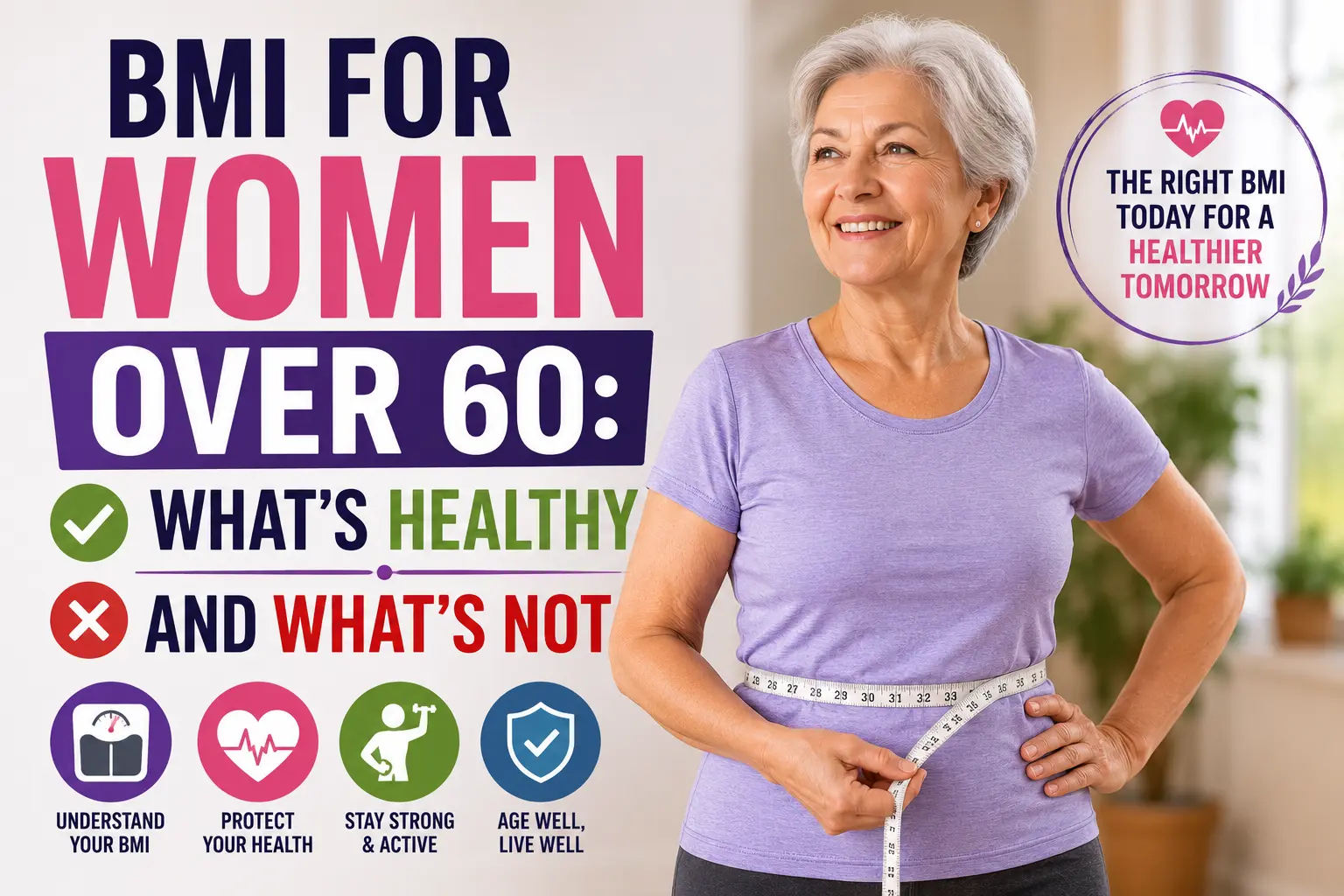
| 60-70 years | 23 - 27 | 22 - 26 | Higher range linked to lower mortality |
| 70-80 years | 24 - 28 | 23 - 27 | Energy reserves become important; underweight is risky |
| 80+ years | 24 - 29 | 23 - 28 | Focus on muscle preservation and functional ability |
Why BMI Changes with Age
Muscle Loss
After 30, adults lose about 3-5% of muscle per decade. Less muscle means lower weight, so a 65-year-old with the same BMI as a 25-year-old may have more body fat and less muscle.
Hormonal Changes
For women, menopause causes fat redistribution to the abdomen. For men, testosterone declines gradually. Both affect body composition.
Metabolic Slowing
Metabolism naturally slows with age. This means weight gain can happen more easily, and weight loss becomes harder.
Women vs Men: What's Different
Women naturally have 8-10% higher body fat than men. This is why healthy BMI ranges for women are sometimes slightly different. For older women, a higher BMI is often protective. Men generally have more muscle mass, so their BMI range stays closer to the standard WHO range.
Why the Higher Range is Better for Seniors
For adults over 65, research consistently shows that the optimal BMI is higher than the standard range. This is because:
- Underweight is more dangerous than overweight
- A slightly higher BMI provides energy reserves during illness
- Muscle loss means weight isn't the same indicator of health
What Else to Check
BMI is a useful starting point, but it's not enough on its own. Here's what else to track:
- Waist circumference: Measures visceral fat. For women, healthy waist is less than 80 cm (31.5 inches). For men, less than 94 cm (37 inches).
- Waist-to-height ratio: Should be less than 0.5 for everyone.
- Body fat percentage: More accurate than BMI, especially for older adults.
Check Your Health
BMI + Waist CalculatorFrequently Asked Questions
What is a good BMI for a 50-year-old woman?
A BMI of 23-26 is often better for women over 50. The standard 18.5-24.9 range still applies, but being on the higher end of the range is not harmful.
What is a healthy BMI for a 70-year-old man?
For men over 70, a BMI of 23-27 is associated with lowest mortality. Higher than the standard range, but better for health.
Can I have a normal BMI but be unhealthy?
Yes. BMI doesn't measure body fat, muscle mass, or fitness. A person with normal BMI can still have high body fat and low muscle. This is why waist measurement and strength matter.
Should I aim for a lower BMI as I get older?
No. Aiming for a lower BMI as you age can be harmful. For older adults, maintaining weight and muscle is more important than lowering BMI.
Scientific References
- World Health Organization. BMI classification.
- Winter, J. E., et al. (2014). BMI and all-cause mortality in older adults. Journal of Nutrition, Health & Aging, 18(9), 835-842.
- National Institute on Aging. Healthy aging and weight management.
Find Your Healthy Range
Calculate your BMI and get personalized health insights.
Free BMI CalculatorKey Takeaways
- Healthy BMI range for 20-50 years is 18.5-24.9 for most adults
- For seniors over 65, optimal BMI is 23-27 - higher than the standard range
- Women naturally have 8-10% higher body fat than men
- BMI doesn't change with age - but the interpretation of BMI does
- Asian populations have lower BMI cutoffs (overweight at 23)
- Underweight is more dangerous than overweight for seniors
- Waist circumference should be less than half your height
- BMI alone doesn't measure muscle mass or fitness
- Focus on how you feel and your mobility, not just the number
- Aim to maintain weight and muscle as you age
Check Your BMI
BMI Calculator
You May Also Like