BMI for Women Over 60: What's Healthy and What's Not
BMI Calculator
Calculate Your BMIIf you're a woman over 60, you've probably noticed that your body doesn't respond the same way it used to. Weight that came off easily in your 40s now seems stuck. And the number on the scale doesn't tell the whole story anymore.
Here's something most people don't know: the healthy BMI range for women over 60 is different than for younger women. What's considered "normal" at 30 isn't necessarily what's healthy at 65.
This isn't about lowering standards. It's about understanding how aging actually works.
Calculate Your BMI
Free BMI CalculatorWhat's a Healthy BMI for Women Over 60?
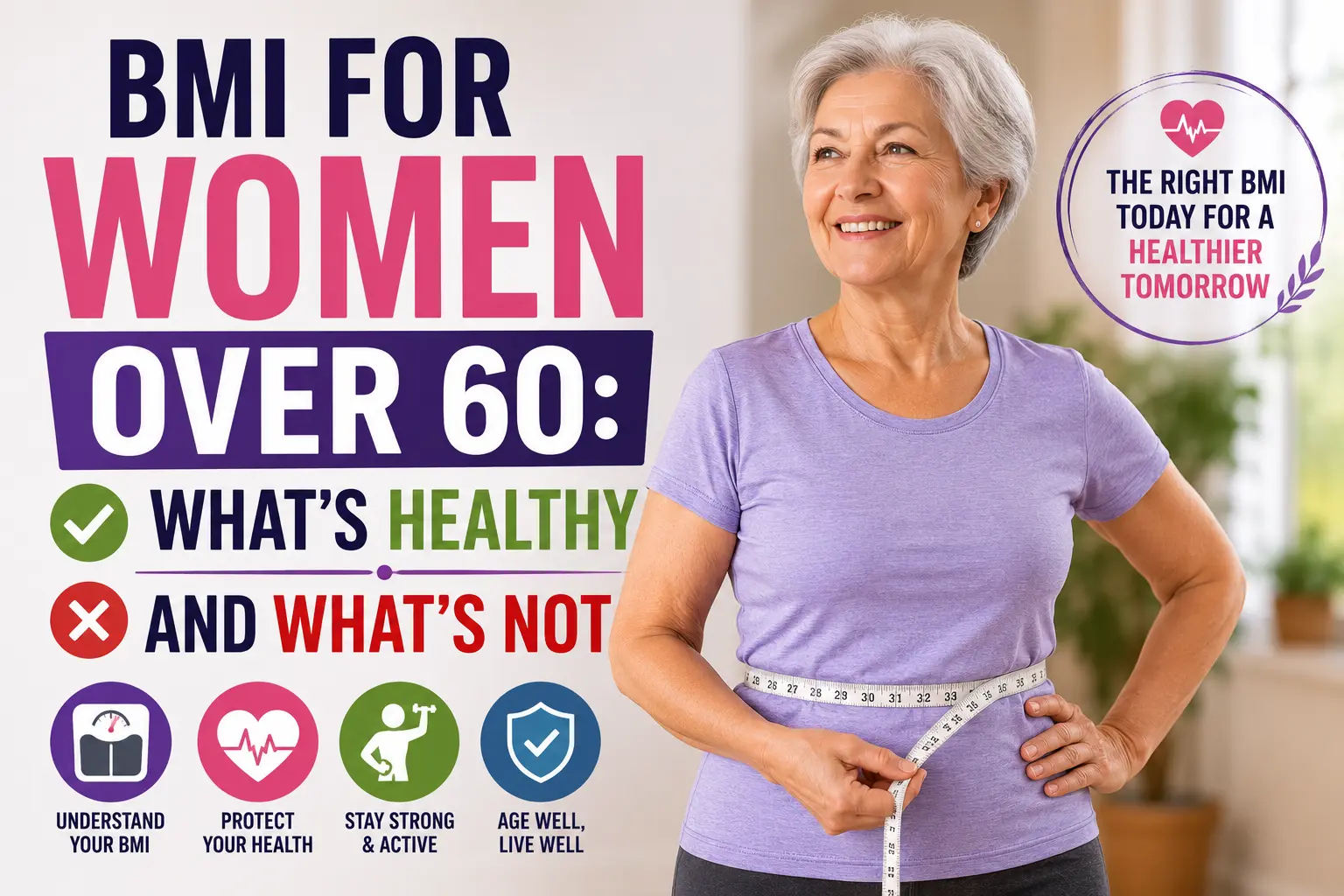
For younger adults, the World Health Organization defines a healthy BMI as 18.5 to 24.9. But for women over 60, research consistently shows that the optimal range is higher: 23 to 27.
This isn't because older women should "let themselves go." It's because the relationship between BMI and health changes with age. What's protective at 30 can be risky at 65.
BMI Categories for Women Over 60
| Category | BMI Range | Health Implication |
|---|---|---|
| Underweight | Below 23 | Higher risk of frailty, falls, fractures, and malnutrition |
| Optimal Range | 23 - 27 | Lowest mortality risk, good energy reserves, better immune function |
| Mild Overweight | 27 - 30 | Acceptable if active, metabolically healthy, and maintaining muscle mass |
| Obesity | 30 and above | Increased risk of diabetes, heart disease, mobility limitations |
Why the Range Changes After 60
Muscle Loss (Sarcopenia)
After age 30, adults lose about 3-5% of muscle mass per decade. By the time you're 60, you've lost about 10-15% of your muscle. This means your weight is lower than it would be with the same amount of fat. A lower BMI doesn't necessarily mean you're leaner—it might mean you've lost muscle.
Energy Reserves
When you're older, illness hits harder. If you have to spend a week in the hospital or recover from an infection, your body needs energy reserves. Having a little extra weight gives you a buffer. People with BMI below 23 have a harder time recovering from illness.
Bone Density
After menopause, bone density declines. Being underweight increases fracture risk—and fractures are serious for older women. Hip fractures in particular can lead to loss of independence. Having some extra weight provides protection against falls and fractures.
Why Underweight Is Dangerous After 60
For younger women, being underweight is often seen as a cosmetic issue. For older women, it's a health risk.
Women over 60 with BMI below 23 are at higher risk for:
- Falls and fractures
- Malnutrition and vitamin deficiencies
- Weakened immune system
- Poor recovery from illness or surgery
- Higher mortality rates
Studies consistently show that underweight older adults have higher death rates than those in the "optimal" range. This is why many geriatricians are more concerned about their patients losing weight than gaining it.
What About Waist Circumference?
Waist measurement remains important after 60. Visceral fat—the dangerous fat around organs—is still a health risk. But the cutoff is slightly different.
Healthy waist for women over 60: Less than 88 cm (34.6 inches)
Waist-to-Height Ratio: Still less than 0.5 for everyone
Even if your BMI is in the optimal range, a large waist indicates health risks. Keep an eye on your waist measurement, not just your weight.
How to Maintain a Healthy Weight After 60
1. Prioritize Protein
You need more protein as you age, not less. Aim for about 1.2 to 1.5 grams per kilogram of body weight. For a 65 kg woman, that's 78 to 98 grams of protein daily. Good sources include eggs, Greek yogurt, cottage cheese, chicken, fish, and tofu.
2. Strength Training
Strength training 2-3 times per week is the most important thing you can do for your health after 60. It preserves muscle, improves bone density, and reduces fall risk. You don't need heavy weights. Bodyweight exercises and resistance bands work well. Chair exercises are also effective if you have mobility concerns.
3. Walk Regularly
Walking 30 minutes daily improves cardiovascular health, maintains mobility, and helps with weight management. It doesn't put stress on your joints and can be done almost anywhere.
4. Eat Regular Meals
As you age, you might lose your appetite. This can lead to unintentional weight loss, which is dangerous. Eating regular meals—even when you're not hungry—helps maintain weight and nutritional status. Eating with others can also help.
5. Stay Hydrated
Older adults often don't feel thirsty even when they're dehydrated. Drink water throughout the day, even if you don't feel thirsty. This helps with digestion, energy, and overall health.
Check Your Health
BMI + Waist CalculatorWhen to See a Doctor
Consult your healthcare provider if:
- Your BMI is below 23 or above 30
- Your waist circumference exceeds 88 cm (34.6 inches)
- You've lost weight unintentionally (5% or more in 6 months)
- You feel weak, tired, or have difficulty with daily activities
- You have other health conditions like diabetes, heart disease, or high blood pressure
Unintentional weight loss in older adults can be a sign of underlying health issues. Don't ignore it.
Frequently Asked Questions
What's the best BMI for an 80-year-old woman?
For women over 80, the optimal BMI range is similar: 24 to 28. But functional ability, muscle strength, and overall health matter more than the number.
Should women over 60 try to lose weight?
If your BMI is above 30, weight loss may be beneficial. But do it gradually—0.5-1 kg per week—and focus on preserving muscle through protein and strength training. Always consult your doctor first.
How can I gain weight if I'm underweight after 60?
Focus on calorie-dense nutrient-rich foods: nuts, nut butters, avocados, olive oil, and full-fat dairy. Eat more frequently (5-6 small meals daily). Nutritional supplements like Ensure or Boost can help under medical guidance.
How often should women over 60 check their BMI?
At least annually during routine wellness visits. More frequently if you're actively trying to gain or lose weight, or if you have health conditions that affect weight.
Scientific References
- Winter, J. E., et al. (2014). BMI and all-cause mortality in older adults: A systematic review. Journal of Nutrition, Health & Aging, 18(9), 835-842.
- National Institute on Aging. Healthy eating for older adults.
- World Health Organization. BMI classification.
Key Takeaways
- For women over 60, healthy BMI range is 23 to 27 - higher than for younger women
- Underweight (below 23) is more dangerous than being mildly overweight after 60
- Slightly higher BMI provides energy reserves for illness recovery
- Muscle loss after 60 means lower weight doesn't necessarily mean better health
- Protein needs increase after 60 - aim for 1.2-1.5g per kg of body weight
- Strength training 2-3x weekly preserves muscle, bone density, and independence
- Healthy waist for women over 60: less than 88 cm (34.6 inches)
- Unintentional weight loss after 60 should be checked by a doctor
- Eating regular meals is important even when appetite is low
- Functional ability and muscle strength matter more than the number on the scale
Check Your BMI
BMI Calculator
You May Also Like