BMI for Asian Women: Why the Cutoffs Are Different

BMI Calculator
Calculate Your BMIYou've just calculated your BMI. It's 24.5. The chart says "Normal." But you're Asian — and research shows your health risks actually start at a lower BMI.
This is one of the most important yet overlooked facts in health: Asian populations have different BMI cutoffs than Western populations.
Here's what you need to know and why it matters for your health.
Calculate Your BMI with Asian Cutoffs
Free BMI CalculatorThe Standard BMI Categories (WHO)
For the general population, WHO defines:
- Underweight: Below 18.5
- Normal: 18.5 - 24.9
- Overweight: 25 - 29.9
- Obese: 30 and above
But these cutoffs were developed primarily from studies of European populations. They don't work the same way for Asian populations.
The Asian BMI Cutoffs
In 2004, the WHO convened an expert consultation to address BMI in Asian populations. The findings were significant:
| Category | Standard BMI | Asian BMI | Difference |
|---|---|---|---|
| Overweight | 25 | 23 | 2 points lower |
| Obese | 30 | 27 | 3 points lower |
For Asian women specifically:
- Overweight begins at BMI 23 (instead of 25)
- Obesity begins at BMI 27 (instead of 30)
This means a BMI of 24.5, which is "normal" for Western populations, is actually overweight for Asian women.
Why Are the Cutoffs Different?
1. Higher Body Fat at Lower BMI
Asian populations naturally have higher body fat percentages at the same BMI compared to European populations. An Asian woman with BMI 23 may have the same body fat percentage as a European woman with BMI 25.
2. More Visceral Fat
Asians tend to store fat viscerally (around organs) rather than subcutaneously (under the skin). Visceral fat is far more dangerous and directly causes disease.
3. Higher Diabetes Risk
South Asians (Indian, Pakistani, Bangladeshi, Sri Lankan) have some of the highest rates of type 2 diabetes in the world, often at BMIs below 23.
4. Different Body Composition
Asian populations generally have less muscle mass and different fat distribution patterns than Western populations.
Check Your Health Risk
Calculate Your BMIBMI Categories for Asian Women
| Category | BMI Range | Health Risk |
|---|---|---|
| Underweight | Below 18.5 | Increased |
| Normal | 18.5 - 22.9 | Lowest |
| Overweight | 23 - 26.9 | Increased |
| Obese | 27 and above | High |
What This Means for You
If you're an Asian woman with BMI 24.5:
- Standard chart says: Normal ✅
- Asian chart says: Overweight ⚠️
This isn't about being "overweight" in the cosmetic sense. It's about health risk. At BMI 24.5, your risk for diabetes, heart disease, and metabolic syndrome is already elevated — even though the standard chart says you're "fine."
Real Example
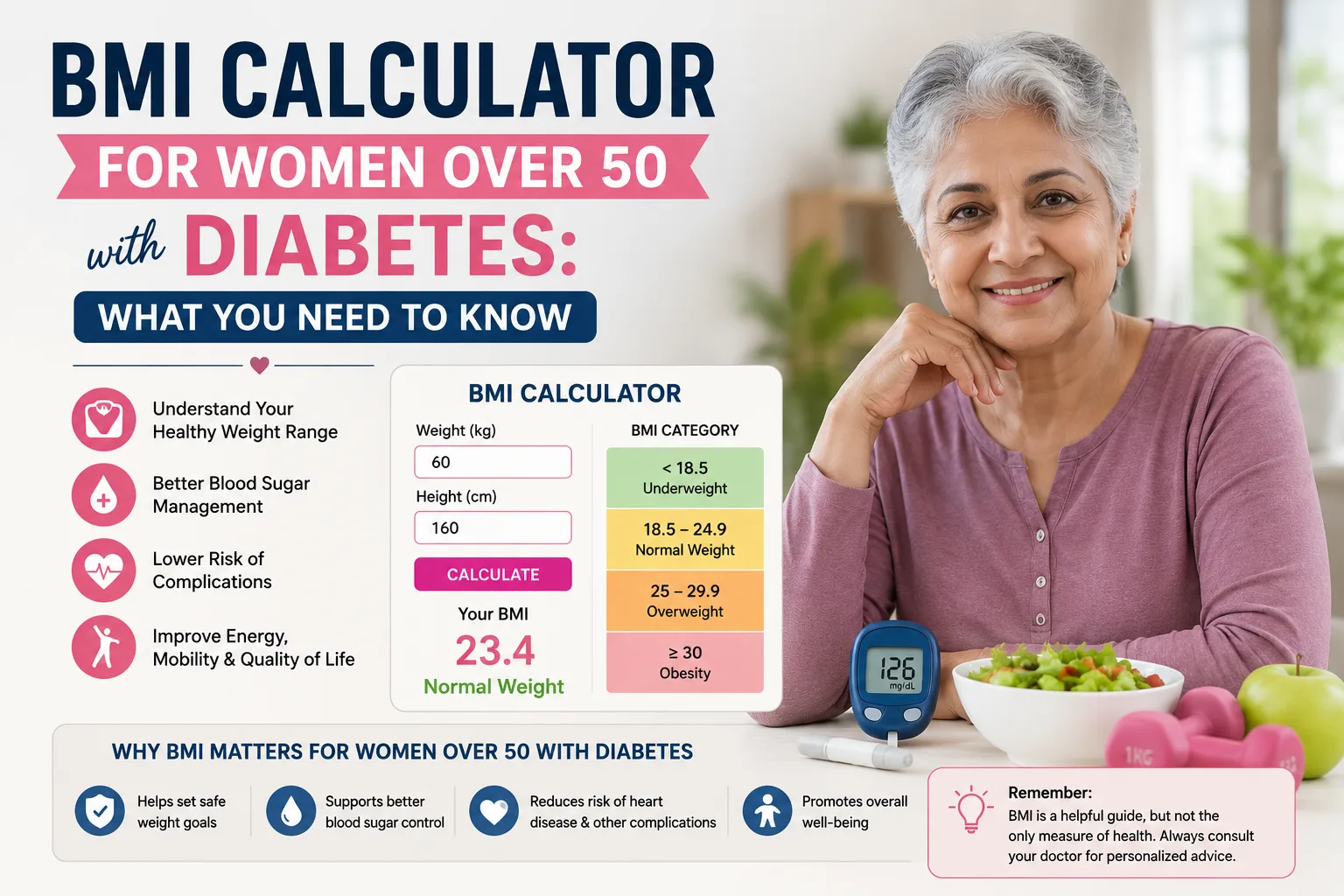
- Height: 160 cm
- Weight: 63 kg
- BMI: 24.6 (Normal on standard chart, Overweight on Asian chart)
- Risk: Elevated insulin resistance, higher diabetes risk
Waist Circumference Matters Even More
For Asian women, waist circumference is particularly important because of the tendency to store visceral fat.
Healthy waist for Asian women: Less than 80 cm (31.5 inches)
Waist-to-Height Ratio: Less than 0.5
Even if your BMI is below 23, a waist measurement above 80 cm indicates increased health risk.
Why This Matters for Your Health
Diabetes Risk
South Asians develop type 2 diabetes at rates 4-6 times higher than Europeans. At a BMI of 23, diabetes risk in South Asians is equivalent to BMI 30 in Europeans.
Heart Disease
Asian populations have higher rates of heart disease at lower BMIs. Waist circumference is a stronger predictor of heart disease than BMI in Asian populations.
Early Intervention
Using Asian BMI cutoffs allows for earlier detection of risk and earlier intervention — potentially preventing diabetes and heart disease before they develop.
Get Your Complete Health Assessment
BMI + Waist CalculatorHow to Maintain a Healthy Weight as an Asian Woman
1. Focus on Waist Reduction
Since Asians tend to store visceral fat, reducing waist size is more important than weight loss. Walk 30 minutes daily and add strength training.
2. Reduce Refined Carbohydrates
Asian diets often include white rice, noodles, and refined flour. These spike blood sugar and increase visceral fat. Replace with brown rice, millet, or quinoa.
3. Increase Protein
Aim for 25-30g protein per meal to preserve muscle and reduce cravings. Good sources: eggs, chicken, fish, tofu, lentils, Greek yogurt.
4. Monitor Blood Sugar
Since diabetes risk is higher, monitor your blood sugar regularly. Even prediabetes should be taken seriously.
5. Strength Training 2-3 Times Weekly
Improves insulin sensitivity and reduces visceral fat. Home exercises: squats, lunges, push-ups, planks.
Frequently Asked Questions
Why are Asian BMI cutoffs lower?
Because Asians have higher body fat and more visceral fat at lower BMIs. This means health risks begin at lower BMIs than in European populations.
Do all Asian populations have the same cutoffs?
Generally yes, but South Asians (Indian, Pakistani, Bangladeshi) may have even higher risk at lower BMIs. Some experts suggest even lower cutoffs for South Asians.
Can I use Asian BMI if I'm not Asian?
No. These cutoffs are specific to Asian populations due to different body composition and risk patterns.
What if my BMI is 24.5 but my waist is healthy?
If your waist is less than 80 cm, your risk is lower. But still monitor blood sugar regularly, as Asian women have higher diabetes risk regardless of waist.
Scientific References
- WHO Expert Consultation. (2004). Appropriate body-mass index for Asian populations. The Lancet, 363(9403), 157-163.
- Lim, R. B., et al. (2015). Asian BMI cutoffs and metabolic risk. International Journal of Obesity.
- Deurenberg-Yap, M., et al. (2000). Body fat and BMI in Asian populations. American Journal of Clinical Nutrition.
Know Your Numbers
Calculate your BMI using Asian cutoffs and check your waist-to-height ratio.
Free BMI CalculatorKey Takeaways
- Asian BMI cutoffs: overweight at 23, obese at 27 (vs 25 and 30 for Western populations)
- Asian women have higher body fat at lower BMI compared to European women
- Asians tend to store more visceral fat (dangerous fat around organs) at lower BMIs
- South Asians have particularly high diabetes risk, often at BMI below 23
- Healthy waist for Asian women: less than 80 cm (31.5 inches)
- Waist-to-height ratio less than 0.5 applies to all populations
- Even with normal BMI, Asian women should monitor blood sugar regularly
- Focus on waist reduction, not just weight loss
- Strength training 2-3x weekly improves insulin sensitivity
- Early intervention at lower BMI can prevent diabetes and heart disease
Check Your BMI
BMI Calculator
You May Also Like