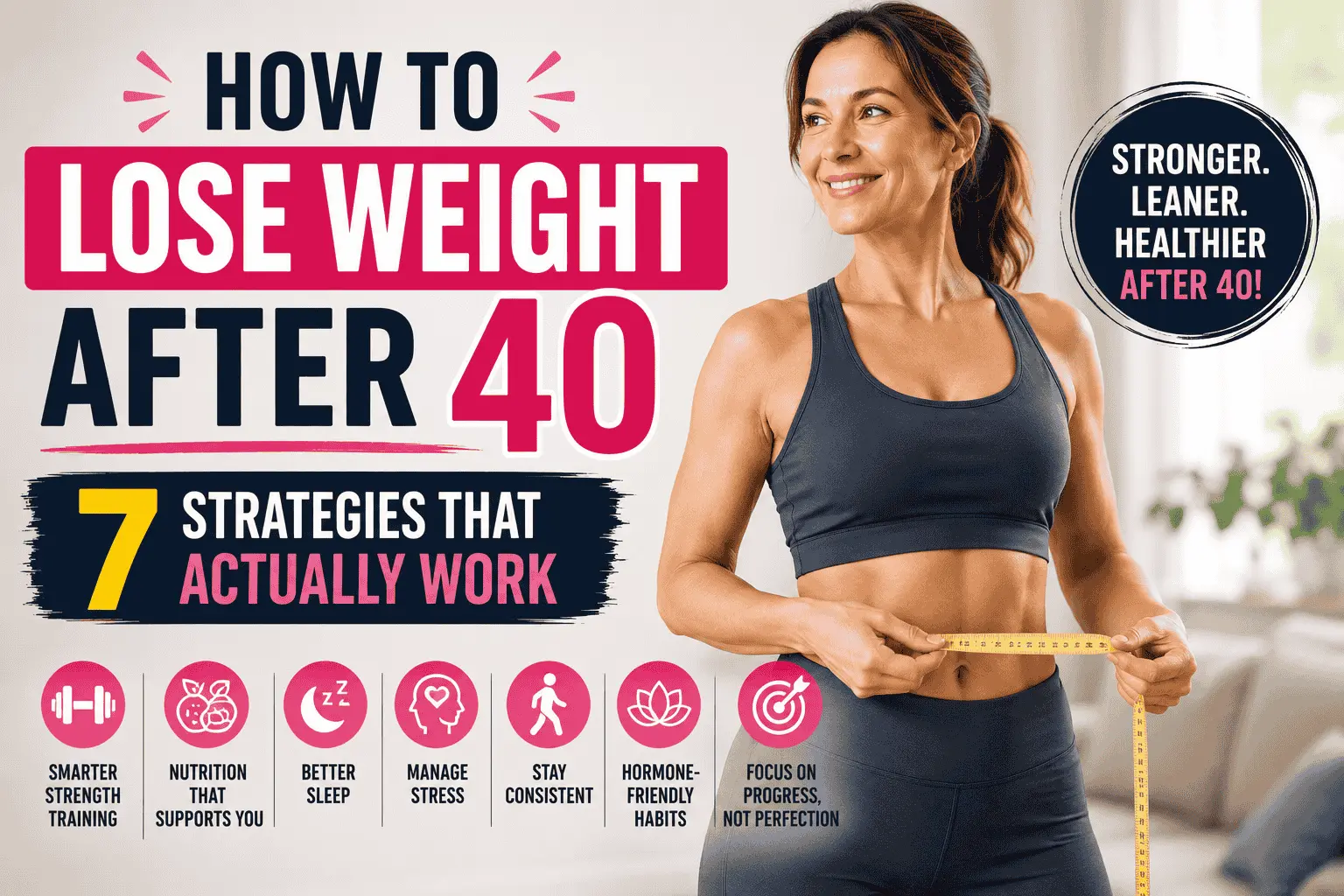
7 Strategies to Lose Weight After 40
BMI Calculator
Calculate Your BMIYou've been doing the same things that worked in your 30s. Eating the same foods. Exercising the same way. But the scale doesn't budge.
You're not alone. And more importantly, it's not your fault.
Weight loss after 40 requires a different approach. Your body has changed. Your hormones have shifted. Your metabolism isn't what it used to be. But that doesn't mean weight loss is impossible—it just means you need to work with your body, not against it.
Here are seven strategies that actually work for women over 40.
Track Your Progress
Free BMI Calculator1. Shift Your Protein Intake
After 40, your body becomes less efficient at building and maintaining muscle. This is called sarcopenia—the natural loss of muscle that comes with aging. More muscle means a faster metabolism. Less muscle means a slower metabolism.
To counter this, you need more protein than you did in your 20s. Aim for about 25 to 30 grams of protein per meal. This helps preserve muscle, keeps you full longer, and reduces cravings.
Good protein sources include eggs, Greek yogurt, chicken, fish, tofu, lentils, and cottage cheese. If you're vegetarian, pay extra attention to getting enough protein.
2. Strength Train Two to Three Times a Week
Cardio alone won't cut it after 40. You need strength training. This isn't about becoming bulky—it's about preserving the muscle you have and building a little more.
When you strength train, you increase your resting metabolic rate. That means you burn more calories even when you're sleeping. It also improves insulin sensitivity, which is crucial as insulin resistance becomes more common with age.
You don't need a gym. Bodyweight exercises like squats, lunges, push-ups, and planks work well. Resistance bands are inexpensive and effective. Start with two sessions per week and build from there.
3. Walk After Meals
This is one of the simplest and most effective habits you can adopt. A short walk after meals—just 10 to 15 minutes—can lower blood sugar spikes by up to 30%.
After 40, your body handles carbohydrates differently. Blood sugar stays elevated longer, which leads to more fat storage. A post-meal walk helps your muscles absorb glucose more efficiently, reducing that spike.
Three short walks a day (after breakfast, lunch, and dinner) add up to 30-45 minutes of activity without feeling like exercise.
4. Get Enough Sleep
This might be the most overlooked weight loss strategy. When you sleep less than seven hours, your hunger hormones go up and your fullness hormones go down.
Ghrelin, the hormone that makes you hungry, increases by about 25% when you're sleep-deprived. Leptin, the hormone that tells you you're full, decreases. This combination makes you hungrier and less satisfied after eating.
Poor sleep also raises cortisol, a stress hormone that tells your body to store fat around your belly. If you're struggling with weight after 40, ask yourself honestly: are you sleeping enough?
Track Your BMI and Health Markers
BMI Calculator5. Manage Stress Intentionally
Chronic stress is a major obstacle to weight loss after 40. When your body is under constant stress, it produces cortisol. Cortisol tells your body to hold onto fat, especially around your midsection.
You can't eliminate stress entirely, but you can manage it. This doesn't mean just "trying to relax." It means active stress management: deep breathing, morning walks, meditation, journaling, or talking to a friend.
Find something that works for you and do it consistently. Even five minutes of deep breathing a day can make a difference.
6. Reduce Added Sugars and Refined Carbs
This isn't about cutting out all carbohydrates—it's about making smarter choices. After 40, your insulin sensitivity is lower, which means your body is less efficient at processing sugar.
When you eat sugar or refined carbohydrates (white bread, white rice, pasta, sugary drinks), your blood sugar spikes. Your body releases insulin to bring it down, and this insulin tells your body to store fat.
Instead, focus on carbohydrates that come with fiber: vegetables, fruits, beans, lentils, and whole grains. These digest more slowly and don't cause the same blood sugar spike.
7. Be Patient and Consistent
This is the hardest strategy but also the most important. Weight loss after 40 is slower. Your body will not respond the way it did in your 20s.
Aim for about 0.5 to 1 kg per week. If you lose less than that, don't panic. The scale doesn't tell the whole story. You might be losing fat and gaining muscle, which keeps the scale steady but changes how you look and feel.
Focus on how your clothes fit, how much energy you have, and how you feel overall. The number on the scale is just one piece of information.
Sample Day of Eating for Women Over 40
Breakfast: Two eggs with vegetables, a slice of whole-grain toast, and a handful of berries
Lunch: Large salad with grilled chicken, avocado, olive oil, and vinegar
Afternoon snack: Greek yogurt with a sprinkle of nuts
Dinner: Baked fish with roasted vegetables and a small serving of quinoa
Evening: Herbal tea
Start Your Journey
BMI + Waist CalculatorFrequently Asked Questions
Why is weight loss harder after 40?
Several factors contribute: muscle loss lowers your metabolism, hormonal changes affect fat distribution, insulin sensitivity decreases, and sleep and stress patterns often worsen. It's a combination of biological shifts, not a lack of willpower.
Can I lose weight after 40 without exercise?
Yes, diet plays a larger role than exercise in weight loss. However, combining diet changes with exercise (especially strength training) produces better results and helps you keep the weight off.
Should I eat fewer calories after 40?
You may need slightly fewer calories because your metabolism has slowed. But drastic calorie cutting can backfire—it can slow your metabolism further and lead to muscle loss. Focus on protein and fiber instead.
How long does it take to see results?
Many women see changes in energy levels and how clothes fit within 2-4 weeks. Noticeable weight loss typically takes 4-8 weeks with consistent effort.
Scientific References
- National Institute on Aging. Healthy eating and weight management for older adults.
- Harvard Health. Weight loss after 40: what works.
- Mayo Clinic. Strength training and metabolic rate.
Know Your Numbers
Calculate your BMI and waist-to-height ratio to get a complete health picture.
Free Health AssessmentKey Takeaways
- Weight loss after 40 requires a different approach than in your 20s and 30s
- Protein becomes more important - aim for 25-30g per meal
- Strength training 2-3 times weekly preserves muscle and boosts metabolism
- A 10-15 minute walk after meals reduces blood sugar spikes
- Sleep deprivation increases hunger hormones by up to 25%
- Chronic stress raises cortisol, which promotes belly fat storage
- Weight loss is slower after 40 - aim for 0.5-1 kg per week
- Focus on how clothes fit, not just the number on the scale
- Small, consistent changes work better than drastic measures
- Consult your doctor before starting any weight loss program
Check Your BMI
BMI Calculator
You May Also Like